
Surgical Dentistry
Tooth Extractions & Wisdom Tooth Removal in Minnesota
Gentle, precise extractions when saving a tooth is no longer the right option.
Extraction is always a last resort, but when a tooth is too damaged, infected, impacted, or crowded to save, removal is the most effective path to protecting your overall oral health. Modern extraction techniques prioritize your comfort and make recovery far smoother than most patients anticipate.

Tooth Extractions & Wisdom Tooth Removal in Minnesota
While preserving natural teeth is always the priority, there are situations where extraction is the healthiest choice. Severely decayed or broken teeth, teeth that are non-restorable, overcrowded teeth interfering with orthodontic treatment, and impacted wisdom teeth all may require removal to protect surrounding teeth and tissues.
General Tooth Extractions
A simple extraction removes a tooth that is visible in the mouth and can be loosened and lifted out with dental instruments. Local anesthesia ensures the area is fully numb before any pressure is applied. Most simple extractions are completed quickly with minimal discomfort during the procedure.
- Severely Decayed Teeth When decay has destroyed too much structure to support a restoration, extraction prevents the spread of infection.
- Broken or Fractured Teeth Teeth broken below the gumline or cracked in ways that cannot be repaired may need to be removed.
- Orthodontic Extractions Removing specific teeth creates space for proper alignment during orthodontic treatment.
Wisdom Tooth Removal
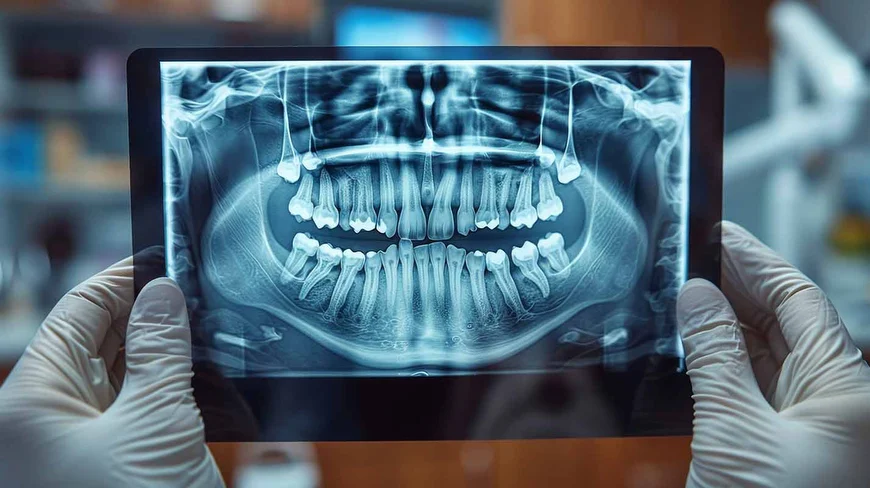
Wisdom teeth are the last molars to develop, typically erupting in the late teens or early twenties. Because most mouths do not have adequate space, they frequently become impacted, meaning they are unable to fully erupt and become trapped beneath the gumline or against neighboring teeth. Impacted wisdom teeth cause pain, pressure, infection, and damage to surrounding teeth if not removed.
- Impacted Wisdom Teeth Fully or partially trapped teeth require surgical extraction to safely remove them from beneath bone or gum tissue.
- Partially Erupted Teeth Wisdom teeth that have partially broken through the gum are particularly prone to infection due to the difficulty of keeping that area clean.
Recovery and Aftercare
Following extraction, a blood clot forms in the socket to protect the bone while healing occurs. Patients are advised to avoid smoking, straws, and hard or crunchy foods for several days. Swelling and mild soreness are normal and typically peak around 48 hours before improving. Full healing of the socket takes several weeks, though most patients feel comfortable within a few days.
Tooth Extractions FAQ
- Does a tooth extraction hurt?
- A tooth extraction should not be painful, because the area is fully numbed with local anesthesia before Dr. Miller begins. You may feel pressure as the tooth is gently loosened from the alveolar bone, but not sharp pain. For anxious patients, Valley View Dental offers NuCalm, a drug-free relaxation system using a biosignal disc and neuroacoustic soundtracks, and Avazzia microcurrent may be used to help sensation return sooner afterward. Nitrous oxide (laughing gas) is also available for patients who prefer it.
- How long does recovery take after a tooth extraction?
- Most patients feel comfortable within three to five days, and many return to normal activities the day after a simple extraction. Swelling and soreness typically peak around 48 hours, then improve steadily. The gum closes over in about one to two weeks, while the socket and underlying bone continue to fill in over several weeks to a few months, and surgical wisdom tooth removal generally takes a bit longer.
- Do all wisdom teeth need to be removed?
- No. Wisdom teeth that erupt fully, line up with the bite, and can be cleaned well may never need removal. Impacted or partially erupted third molars are more likely to cause infection, cysts, or damage to the neighboring second molars. Dr. Miller uses panoramic X-rays or 3D cone beam CT to see the root position and nearby nerve before recommending extraction.
- What is dry socket, and how do I prevent it?
- Dry socket, or alveolar osteitis, happens when the protective blood clot is dislodged or dissolves before the socket heals, exposing the bone and causing throbbing pain a few days after extraction. To prevent it, avoid straws, smoking or vaping, and forceful spitting or rinsing for at least three to five days. Following Dr. Miller's aftercare instructions closely gives the clot the best chance to stay in place.
- What should I eat after a tooth extraction?
- For the first few days, choose soft, cool or lukewarm foods such as yogurt, smoothies eaten with a spoon, mashed potatoes, eggs, and broth-based soups. Avoid crunchy, chewy, spicy, or very hot foods until the site has started to heal. Dr. Miller's nutrition-focused approach also emphasizes protein and nutrient-dense foods, since good nutrition supports tissue repair and healing.
- Can an extracted tooth be replaced?
- Yes. Once the socket heals, a missing tooth can be replaced with a dental implant, a bridge, or a partial denture. When an implant is planned, Dr. Miller may place a bone graft such as Easy-Graft CLASSIC at the time of extraction to help preserve the alveolar ridge, then use 3D cone beam CT imaging to confirm bone volume before placing the implant, typically three to six months later.
- What is a biological tooth extraction?
- A biological extraction is a tooth removal that focuses on gentle technique and supporting the body's natural healing. At Valley View Dental, all water used during extractions is charged with molecular hydrogen by the Axiom H₂ system, and Dr. Miller uses Argentyn 23 Professional bio-active silver hydrosol and Micronic Silver Oleazone, an ozonated oil applied to the socket, as part of her holistic aftercare approach.
Your Holistic Dentist
Meet Dr. Miller